Rapid Response - Fed hold leaves investors puzzled

The Federal Reserve left monetary policy settings unchanged overnight, with the Chairman saying that a rich period of information would help determine the right policy setting. There was a striking gap between the assessment of broadening strength in the economy and the lack of action on inflation, which remains substantially above the 2% target. He also announced a change to the meeting calendar next year.
The Committee kept the target range at 3.75%-4.00% by a 10–2 vote. Governor Lisa Cook and Cleveland Fed President Beth Hammack dissented in favour of an increase. In September, the +0.25% hike had been a unanimous 2–0 decision.
The statement changed in two places:
"Economic activity is expanding at a solid pace" became "a strong pace".
September's "Today's policy action will support a timelier return to the Committee's 2 percent goal" was replaced with "The accumulation of more information will help the Committee determine the policy stance appropriate to ensure a timely return of inflation to the Committee's 2 percent goal".
The upgrade to growth is the only change to the economic assessment. Everything else carried over word for word:
"Productivity growth is strong, and capital investment is robust",
"Job gains have kept pace with the workforce, and the unemployment rate has changed little",
"Inflation remains elevated",
"The Committee will deliver price stability", and
The "ample reserves" balance sheet line.
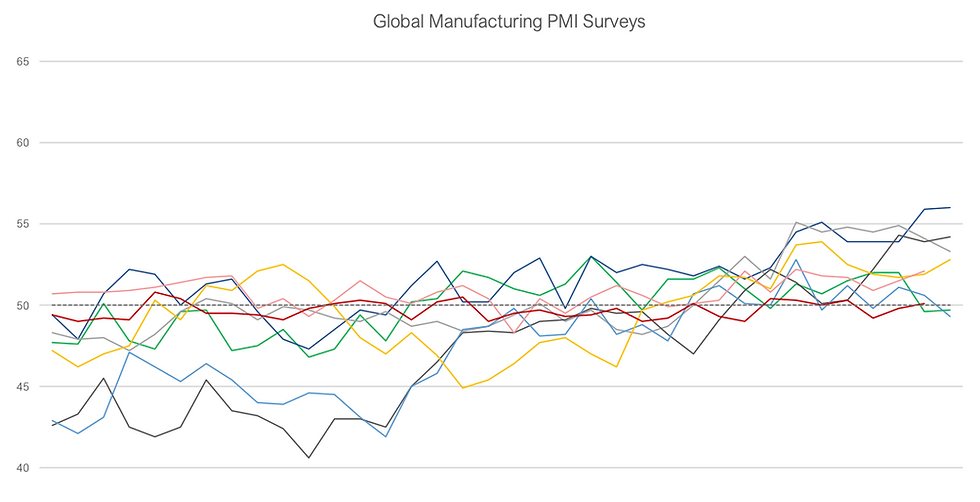
In his opening statement, Warsh said H1 GDP was revised up to 2.4% from 1.8% and that Q3 was "likely running above 3 percent growth", with business investment "likely rising at about a double-digit pace".
On the dual mandate, he said "conditions are quite positive" on the employment side, while inflation has been "running above the Committee's objective for close to 6 years". He added that "Energy and related prices have moved higher again in recent weeks".
Financial and credit conditions "have tightened for some businesses and households", though "I'm unwilling and unable to call them tight". In response to questions, he said the "overwhelming judgment" is that "this monetary medicine [is] starting to work some, but there's no firm conclusions".
Asked whether consumers would still trust the 2% pledge, he acknowledged worries over sharply higher gasoline prices but called them "short-term in nature".
On the midterms in 6 days, he said "Politics played no role in the decision… I didn't hear an utterance about politics". He then added, "it's an information-rich interval in the coming period, having nothing to do with politics".
Asked whether higher rates could slow the AI investment boom, he said: "I don't believe they are somehow divorced from the rest of the economy".
He expects most but not all of the task forces to report back by the end of the year.
Chair Warsh also announced a change to the future meeting calendar:
There will still be eight FOMC meetings a year.
In 2027, one will be devoted solely to strategy, with no rate vote and no statement.
He expects two such meetings in 2028.
He called the schedule "an institutional choice" and "yet another change to get the conduct of monetary policy on the right track".
S&P500 7,744 +0.3%, Nasdaq Comp. 26,550 +0.3%, S&P/ASX200 future 8,900 +0.5%,
US 2yr 4.70% -4bps, US 10yr 5.02% +2bps
US dollar (DXY) index 102.12 -0.2%, AUDUSD 0.7054 +0.4%, Gold US$/oz 4,067 +0.2%
Fin-X Capital Group View
Last night's hold was widely anticipated by markets, partly due to the proximity to the midterms and in part due to recent comments from influential FOMC members indicating that no change was likely.
However, the chair said after September's meeting that the Fed was removing some degree of accommodation. Last night, he reiterated that their financial conditions didn't appear tight. Given that PCE inflation is running at +3.4% yoy, well above the 2% target, and the relatively rosy growth outlook, it's difficult to understand why the FOMC would not prefer to at least be at neutral.
During the press conference, he was challenged directly on why the Fed did not hike. He said bringing inflation down is a gradual process and pointed to inflation expectations moving lower since September.
He also argued that strong growth is not itself inflationary. "Is the economy running too hot?... That isn't the judgment of most of my colleagues", he said, citing productivity gains "however imperfectly measured". He said he did not want to "throw people out of work" to bring inflation down. GDP and PCE inflation are due to be updated tonight, and the FOMC had already seen the figures.
Given that the Conference Board's 12-month consumer inflation expectations remain at +5.8% yoy, the Fed is taking a very different approach to the RBA, which is growing more concerned about entrenched inflation expectations despite rising unemployment. The Fed is placing more weight on comparatively stable market pricing of longer-term inflation. Even so, 5yr breakeven inflation moved +0.04% higher to 2.50% after the meeting, having been as low as 2.19% at the end of July.
In July, we argued that Warsh's focus on reforming the institution risked making him too slow to act on price stability. He again devoted much of his comments to an institutional change (strategy meetings) at a meeting where the Committee's own assessment pointed to a hike. September's unanimous hike now looks like credibility repair, while the October pause undoes part of that work.
Nevertheless, a +0.25% increase in the Fed Funds rate is more than 80% priced in for December, in line with the September dot plots. Roughly 3 more hikes in total are still priced in over the next year. So, pricing has changed little despite the confusing message.
One additional factor we are watching closely is the work being conducted on the balance sheet and the potential impact on asset prices. The task force's remit is to "review the benefits and risks of the current ample-reserves regime and the composition of the Fed's balance sheet [and] assess alternative frameworks". Known to favour a smaller balance sheet, the Chair told Congress in July that once a crisis is over, monetary policy "should be driven almost exclusively by interest rate policy", a view that has attracted support from other FOMC members.
Disclaimer
The contents of this communication are prepared by Fin-X Capital Group Pty Ltd (A.C.N. 627 650 293; AFSL 520526 trading as Fin-X Capital). The information contained in this communication is general in nature and does not take into consideration any investors personal objectives, goals, needs and financial situation. You should not rely on the information contained in this document to make any investment decisions without first consulting an investment professional such as your financial adviser. Any unauthorised use of this document is prohibited. This document (including any attachments) is intended only for the addressee, it may contain information of a privileged and confidential nature. If you are not the addressee of this communication, you must not copy, reproduce, disseminate or use this email and its contents. If this communication has been received in error by you, please inform us immediately and securely delete. Sharing, transmitting, copying, disseminating all or part of the contents of this document may result in a breach of the Federal Privacy Legislation and or copyright and trademark infringement of Fin-X Capital Group Pty Ltd and its related entities.