Fin-X Weekly 22nd June 2026

Global markets rose despite more hawkish central bank messages, as investors priced a higher-for-longer real-rate outlook. The incoming Fed Chair also unveiled an ambitious plan of reforms.
Oil prices retreated on the proposed US-Iran memorandum, although Iran closed the Strait of Hormuz over the weekend, casting doubt on progress.
Chinese activity data showed further weakness in domestic demand, while industrial output surprised to the upside.
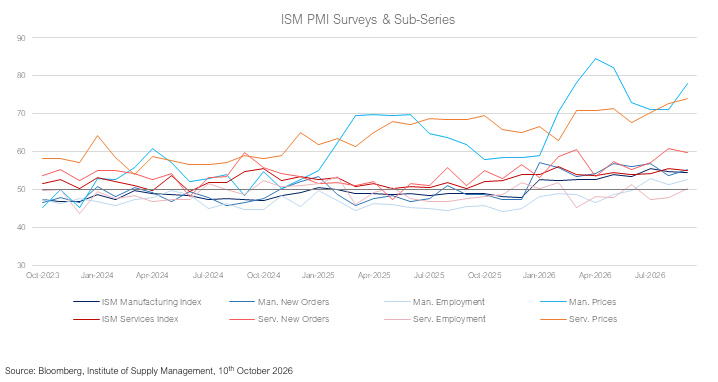
Besides the Middle East peace talks, the main events this week include today's Chinese rate decision, the latest flash PMIs, Australian and US inflation figures, Australian labour and household spending data, and quarterly earnings from Micron.
Global markets spent the week weighing more hawkish central bank messages against hopes of progress towards peace in the Middle East.
Risk assets remained broadly supported, although markets more firmly priced higher-for-longer real-rate risk.
SpaceX continued to rally after the previous week’s IPO, closing +14.9% higher at US$185 per share. Investors also continued to assess the broader implications of the US government’s decision to restrict access to Anthropic’s most advanced model on national security grounds.

Oil prices retreated following the announcement that a memorandum of understanding between the US and Iran was scheduled to be signed on Friday, opening the door to 60 days of peace talks. However, a leaked version met with near universal opposition after the US appeared to exceed all of Iran’s demands to reopen the Strait of Hormuz.
With nuclear negotiations deferred, many questioned the purpose of the conflict. Over the weekend, Iran refused to negotiate and said the Strait of Hormuz was closed before talks had begun, following renewed clashes between Israel and Hezbollah in Lebanon.
G7 leaders had welcomed the prospect of peace negotiations and hoped to join a “robust and comprehensive” formal treaty to succeed the memorandum. The planned treaty would cover Iran’s nuclear programme, ballistic missiles and regional stabilisation, with IAEA involvement. France and Britain also committed to a joint naval operation to protect merchant vessels and verify the removal of mines as the Strait of Hormuz reopens.
The British prime minister later suffered a substantial setback after the Mayor of Manchester, a fellow Labour Party member, secured a resounding by-election victory and announced his challenge for the leadership. In an effort to bolster his position, the British prime minister announced that the UK would follow Australia's lead in introducing a social media ban for under-16s.
China’s monthly release provided the most significant activity data. Retail sales declined -0.6% from a year earlier, underscoring weakness in the domestic economy. Urban fixed-asset investment contracted -4.1% as of end-May, dragged lower by real estate and manufacturing. Industrial output provided the only bright spot, rebounding from April’s near three-year low to +4.5% yoy.

European and APAC bond yield curves moved higher following the week’s central bank meetings.
The US front end rose after the Fed kept the funds rate at 3.50%–3.75% in Kevin Warsh’s first meeting as Chair. The FOMC issued a radically shortened 130-word statement and stressed that the Committee “will deliver price stability,” dropping earlier language that had hinted at eventual cuts.
After Chair Warsh confirmed that the 2% inflation target would be maintained, investors realised that interest rates were far more likely to move higher. Updated committee member projections removed the previous median expectation of a rate reduction this year. They nudged the 2026 Fed Funds rate projection up to around 3.8%, implying that at least one hike is possible. Reuters highlighted that 9 /19 policymakers now expect a higher policy rate by the end of 2026, with markets bringing forward the odds of a hike to as early as September–October.

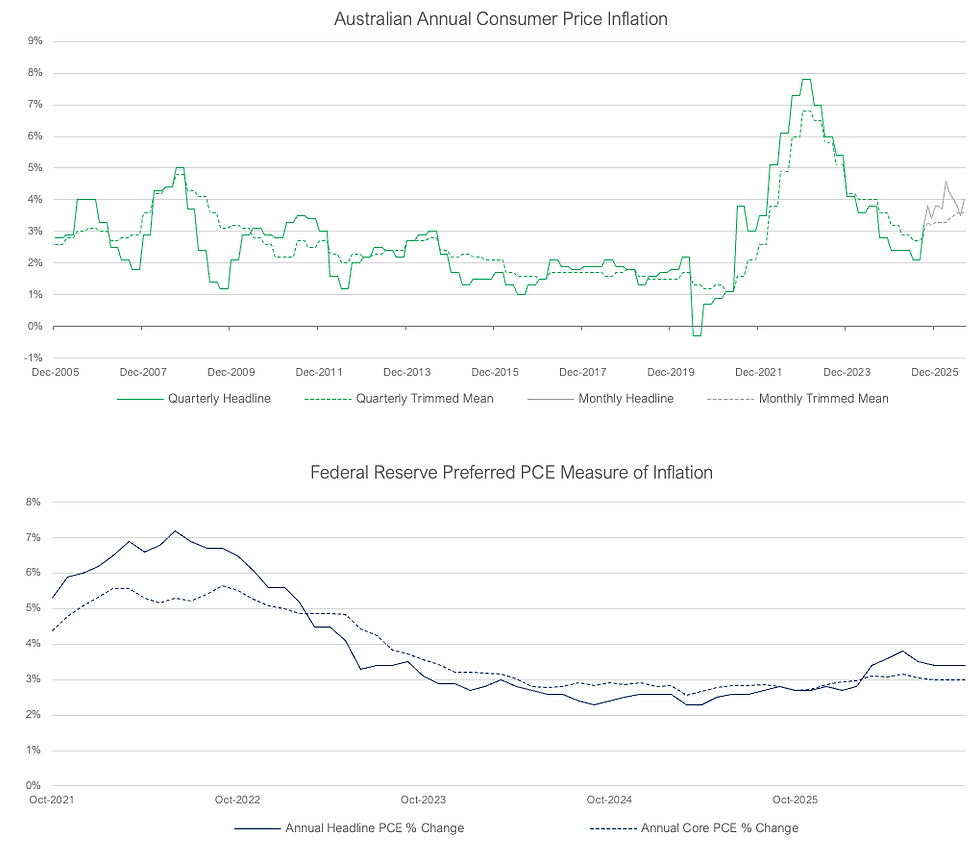
The newly appointed Chair also announced that the Fed would no longer provide forward guidance. Chair Warsh announced five task forces to review communications, balance sheet policy, the use of and reliance on existing data sources, productivity and jobs in an era of transformation, and the inflation framework. Regarding the inflation framework, he has previously expressed support for greater use of trimmed-mean measures, as used in Australia. The task forces are expected to report back by the end of the year.
The Bank of Japan raised its policy rate by +0.25% to around 1.0%, while the Swiss National Bank kept its policy rate at 0%, as widely expected.

Sweden’s Riksbank also held its policy rate at 1.75%, judging activity “somewhat weaker than normal” but consistent with an eventual strengthening. It also signalled some probability of additional tightening later in the year if inflation surprises on the upside.
The Bank of England’s MPC held Bank Rate at 3.75% in June, although the vote split 7–2, with Megan Greene and Huw Pill again preferring a +0.25% hike.
The RBA left the cash rate at 4.35% in a unanimous decision, following three +0.25% hikes earlier this year that fully reversed 2025’s cuts. The short statement emphasised that “headline and underlying inflation are still too high” and that the Board remains focused on preventing energy-driven spikes from becoming embedded. Market pricing now assigns essentially zero probability to another hike at the next meeting but still reflects a roughly even chance of one further move later in 2026. Headline CPI inflation, due on Wednesday, is expected to increase slightly to +4.3% yoy.
The Labor government was forced to water down its proposed capital gains tax reforms after facing opposition in the Senate. The Small Business CGT Carve-out was expanded to cover businesses with turnover up to $10 million, a significant increase from the initially planned $2 million threshold. There were additional concessions for startup founders, employees, and early-stage investors. Testamentary discretionary trusts were also exempted from the 30% minimum tax on trusts, and deductible charitable donations will reduce capital gains.
This week, investors are likely to continue to focus on progress in the Middle East. Chinese prime loan rates are expected to be held steady later today, while the S&P Global flash PMIs are expected tomorrow. US PCE inflation is due on Wednesday evening, after Australian CPI, and is expected to rise from +3.8% yoy to +4.1% yoy. Australian employment and household spending figures follow on Thursday, with unemployment expected to fall to 4.4%. Micron’s quarterly earnings results are also due on Thursday.

Disclaimer
The contents of this communication is prepared by Fin-X Capital Group Pty Ltd (A.C.N. 627 650 293; AFSL 520526). The information contained in this communication is general in nature and does not take into consideration any investors personal objectives, goals, needs and financial situation. You should not rely on the information contained in this document to make any investment decisions without first consulting an investment professional such as your financial adviser. Any unauthorised use of this document is prohibited. This document (including any attachments) is intended only for the addressee, it may contain information of a privileged and confidential nature. If you are not the addressee of this communication, you must not copy, reproduce, disseminate or use this email and its contents. If this communication has been received in error by you, please inform us immediately and securely delete. Sharing, transmitting, copying, disseminating all or part of the contents of this document may result in a breach of the Federal Privacy Legislation and or copyright and trademark infringement of Brerona Capital Asset Management Pty Ltd and its related entities.