Fin-X Weekly 23rd March 2026
- Brett Careedy
- Mar 23
- 5 min read

Global equities declined for a third consecutive week as key indices broke below technical support levels amid heavy trading. Rising bond yields tightened financial conditions and extended the sell-off across asset classes.
Central banks generally signalled a more hawkish stance. But the RBA was the only one to change the policy settings, raising the cash rate at a second successive meeting. Labour market data subsequently showed underlying resilience despite a higher headline unemployment rate.
This week, in addition to events in the Middle East, investors will likely focus on Australian CPI, global flash PMIs, G7 meetings, OECD forecasts, and various sentiment surveys.
Global equity markets struggled for a third consecutive week. Friday saw very large trading volumes due to an S&P Dow Jones global equity rebalance, with key American indices breaking below the 200-day moving average. Consequently, the MSCI World index also broke below this important technical level of support.
The S&P/ASX 300 index of leading Australian shares has now generated a negative price return in the 2025-26 financial year. However, it remains in positive territory on a total return basis, once dividends and imputation credits are included.

Bond yields rose and prices fell, placing further strains on global liquidity and prompting the sell-off to broaden to precious metals.

The move higher in yields and the spillover into defensive assets pointed to a more general repricing of risk as investors responded to a further sharp rise in energy prices following an apparent escalation in the Persian Gulf conflict.
On Wednesday, Israel had hit the South Pars gas field, jointly owned and operated by both Iran and Qatar. Qatar said that supply could be affected for as long as 3 to 5 years.
Initially, President Trump appeared to suggest that the war would not be over by the end of March, requesting a delay of his upcoming trip to China. He is clearly sensitive to the economic impact of rising energy costs ahead of the midterm elections, as the US surprisingly allowed Iranian oil already on board ships to be sold. Moreover, he was critical of the gas field strike. He later said that he was considering “winding down” the US’s war against Iran as the American military is “getting very close” to meeting its objectives. However, he also said he did not want a ceasefire between the US, Israel and Iran, and it later emerged that several thousand more US troops are being relocated to the region.

In addition, Israeli Prime Minister Benjamin Netanyahu has said that some form of ground invasion would be necessary to achieve its objective of regime change, without providing further clarification.
Several central banks held meetings last week and commented on the changing outlook. Most left interest rates unchanged but adopted a more hawkish stance.
The ECB said that it is keeping its options open in the face of high uncertainty, while the Bank of England said that it was “ready to act as necessary.” The Bank of Japan reiterated that the economy is in a “moderate recovery” with inflation around target once subsidies are adjusted for, but flagged oil‑driven import‑price risks and kept a tightening bias contingent on wage outcomes. The three central banks are all expected to raise rates at the next meetings scheduled for the end of April.
US producer price inflation rose by significantly more than expected just before the Federal Reserve rate announcement on Wednesday. PPI jumped from +2.9% yoy in January to +3.4% yoy last month, while core PPI (ex-food and energy) rose from a revised +3.5% yoy to +3.9% yoy.
Despite the inflation surprise, the FOMC kept US dollar interest rates on hold and are not expected to raise rates next month at Jerome Powell’s last scheduled meeting as Chairman. Committee members raised their forecasts for real GDP growth by +0.1% to +2.4% yoy in 2026 as confidence in productivity gains grew. However, members also increased the 2026 PCE inflation forecast from +2.4% yoy to +2.7% yoy, and the updated “dot plots” showed that fewer members were calling for rate cuts.
At the press conference, Jerome Powell said that the impact of the energy price hike would be included in committee papers at the next meeting, also at the end of April. However, markets continue to price in no change.
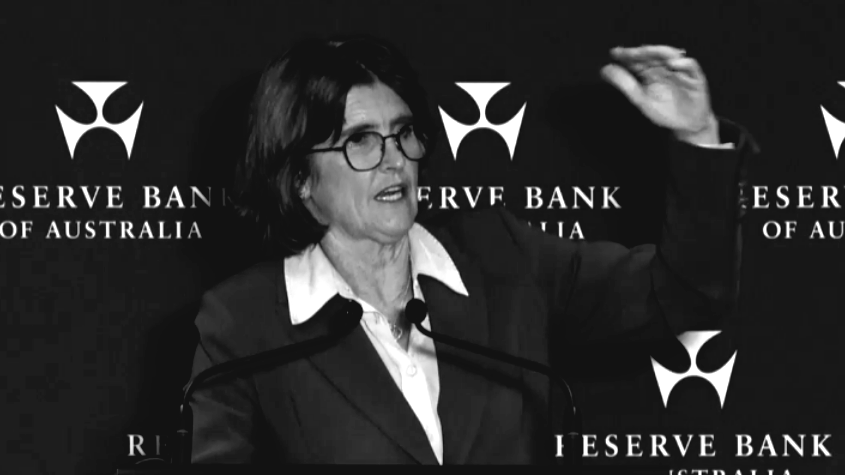
Similarly, the RBA governor told the media that the impacts of an oil price shock were not specifically modelled for Tuesday’s meeting. In a 5-4 vote, the Monetary Policy Board decided to raise the cash rate by +0.25% for the second consecutive meeting, to 4.1%. However, the split decision concerned only the timing of the increase, which the governor said was already justified by the strength of domestic demand relative to current capacity.
The February seasonally adjusted unemployment rate subsequently jumped from 4.1% in January to 4.3%. However, the details of the report were much stronger as the trend unemployment rate fell from 4.3% to 4.2%.
This week, Australian CPI figures are expected to show both the headline series (+3.8% yoy) and trimmed mean (+3.4% yoy) remained at the same levels as in January.
Before the energy price shock, Chinese activity data last week showed that retail sales for the first two months of the year rose by +2.8% from a year earlier. Industrial output climbed +6.3%, also exceeding expectations for a +5% rise. Investment in fixed assets, which includes property, was up by +1.8% yoy. However, the urban unemployment rate also edged up more than anticipated, from 5.1% to 5.3%, in the first two months of this year.
Besides Australian CPI data this week, the key global data focus will be the flash S&P Global PMIs. The G7 finance ministers will meet, and the OECD will publish updated interim economic forecasts. Confidence and sentiment indicators will be released in the US and the euro area, with analysts expecting a deterioration in consumer sentiment as petrol prices and geopolitical headlines weigh on households.
In significant company news, Nvidia is set to unveil new details about its CPU at its annual GTC AI conference. Nvidia shifted its CPU strategy in February, announcing that standalone processors are now deployed in Meta data centres.

Disclaimer
The contents of this communication is prepared by Brerona Capital Asset Management Pty Ltd (A.C.N. 627 650 293; AFSL 520526). The information contained in this communication is general in nature and does not take into consideration any investors personal objectives, goals, needs and financial situation. You should not rely on the information contained in this document to make any investment decisions without first consulting an investment professional such as your financial adviser. Any unauthorised use of this document is prohibited. This document (including any attachments) is intended only for the addressee, it may contain information of a privileged and confidential nature. If you are not the addressee of this communication, you must not copy, reproduce, disseminate or use this email and its contents. If this communication has been received in error by you, please inform us immediately and securely delete. Sharing, transmitting, copying, disseminating all or part of the contents of this document may result in a breach of the Federal Privacy Legislation and or copyright and trademark infringement of Brerona Capital Asset Management Pty Ltd and its related entities.