Fin-X Weekly 11th May 2026
- Brett Careedy
- May 11
- 5 min read
Investor sentiment improved as global equities rose for a sixth consecutive week, with major US and global indices reaching record closing highs.
Oil prices remained volatile as developments in the Middle East drove a wide intraweek range, while OPEC+ announced a smaller output increase than last month.
Central banks retained a hawkish bias, with the RBA lifting rates back to 4.35% and the Norges Bank surprising markets with an earlier rise.
The week ahead centres on Iran’s response to the latest US peace proposal, President Trump’s trip to Beijing, and the Australian federal budget tomorrow.
Investor sentiment improved last week on strong earnings growth, hopes of peace in the Middle East, a reasonable jobs report, and despite continued central bank hawkishness. The Australian dollar also remained supported by the RBA’s third interest rate rise this year.
Global equities rose for a sixth consecutive week, with the S&P 500, Nasdaq Composite and MSCI All Country World indices ending the week at record closing highs. The Australian market continued to lag.
With the first quarter reporting season drawing to a close, S&P 500 earnings are +17.8% ahead of forecasts, implying an annual increase of +25.3%, according to Bloomberg. The strongest profit increases have so far come from Consumer Discretionary (+48.2%), Communications (+46.9%), Technology (+42.0%) and Materials (+41.7%). Health Care (-3.1%), Energy (+1.4%) and Consumer Staples (+6.2%) lagged.
Macquarie delivered the headline result in Australia last week, with net profit up +30.0% on FY25 and return on equity improving from 11.2% to 14.0%. However, the share price rose only +0.4%.
Westpac (-2.6%) and NAB (-3.7%) beat or met profit expectations at the headline level, but net interest margin compression from intense competition in deposits and lending weighed on the outlook.
Brent crude traded in an intraweek range of almost US$20. It briefly fell toward the low US$90s on optimism around a potential US–Iran memorandum of understanding, before rebounding above US$100 after fresh exchanges of fire in and around the Strait of Hormuz.

OPEC+ said it will raise oil output by 188,000 barrels per day in June, at the cartel’s first meeting since the departure of the United Arab Emirates was announced. The latest increase is slightly below the 206,000 barrels per day rise OPEC+ announced last month.
On Saturday, President Trump announced a three-day ceasefire between Russia and Ukraine to allow for the Russian Victory Day celebrations.
This week, the president travels to Beijing and is likely to attempt to persuade China to pressure Iran into a peace deal. He will be accompanied by a troop of business leaders, for discussions that are also likely to cover technology and trade topics.
China’s exports rebounded more than expected in data released on Saturday, rising +14.1% in April from a year earlier, despite shipping disruptions caused by the war in Iran. The improvement in outbound shipments followed a slowdown in China’s exports during the first month of the war. It was driven by the investment boom in artificial intelligence and strong global demand.

The American trade deficit widened in March to US$-60.3 billion, despite support from petroleum exports.
The ISM April Services index, like the previous week’s manufacturing survey, showed subdued employment at 48.0 and elevated prices paid at 70.7. New orders slowed sharply to 53.5 from 60.4 a month earlier.
The JOLTS report showed hiring remains at very low levels. There were signs it may be bottoming out, although seasonal adjustments appear to be flattering the headline series.

In Friday’s labour report, the unemployment rate held at 4.3%. Non-farm payrolls exceeded estimates, adding +115,000 new jobs in April. Together with March’s revised +185,000 gain, this produced the strongest two-month increase since 2024. Caution still seems warranted, as subsequent revisions have often been significant over the past couple of years. There were also signs of weakness: underemployment rose by +0.2% to 8.0%, average hourly earnings slipped to +3.6% yoy, and participation contracted by -0.1% to 61.8%. The University of Michigan consumer sentiment survey also reached another all-time low.

Following the recent 8-4 decision, which included dissents in both directions, FOMC speeches last week showed that the centre of gravity has shifted meaningfully toward a symmetric policy stance. A growing minority is willing to discuss hikes openly if the energy shock proves durable.
The Norges Bank surprised the market with an earlier-than-expected quarter-point rate rise to 4.25%.
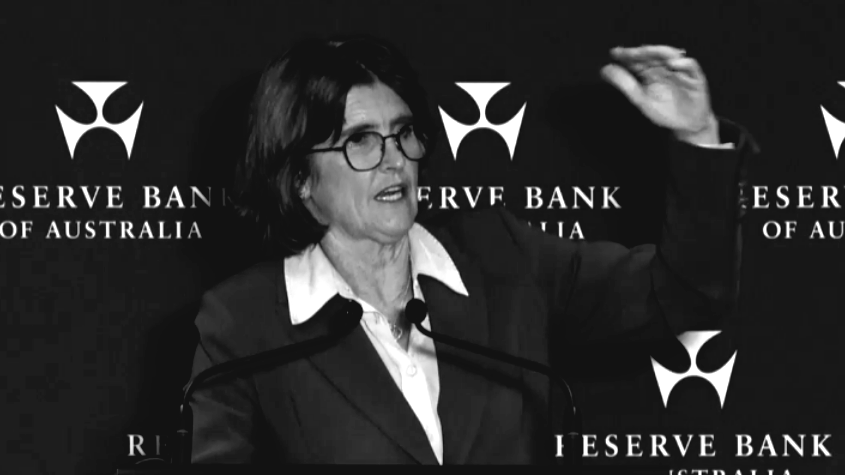
In contrast, the RBA’s increase back to the post-pandemic peak of 4.35% was widely anticipated and saw only one voter of nine dissent, compared with the 5-4 split in March.
Since the previous meeting, the Monetary Policy Committee had become more certain that the effects of the war were likely to prove inflationary, while a dampening effect on future growth was apparent in the updated quarterly forecasts. The same day, this was echoed in March Household Spending figures, which rose +6.3% yoy, driven by a +5.1% rise in transport costs due to higher fuel prices.
The governor later confirmed at the press conference that monetary policy is now perceived to be slightly restrictive. This is intended first to respond to previously seen excess demand and, second, to prevent a rise in inflation expectations. There was consequently also a hint that the cash rate may not need to rise much further, consistent with market pricing. However, the governor could not avoid agreeing that tomorrow’s federal budget could yet alter the path of the cash rate later this year.
The government has already legislated further personal income tax cuts from 1st July 2026. Other measures expected from the Treasurer include possible extensions of electricity rebates, NDIS reform, support for new home construction, and changes to capital gains taxes and negative gearing.
This week, Iran is expected to respond to the latest US peace proposal. Data highlights include an updated NAB Business survey in Australia, with CPI, PPI, retail sales and industrial production all due in the US. Chinese inflation figures are also due later today, with economists looking to gauge the extent to which energy costs may be flowing through to global goods prices.

Disclaimer
The contents of this communication is prepared by Brerona Capital Asset Management Pty Ltd (A.C.N. 627 650 293; AFSL 520526). The information contained in this communication is general in nature and does not take into consideration any investors personal objectives, goals, needs and financial situation. You should not rely on the information contained in this document to make any investment decisions without first consulting an investment professional such as your financial adviser. Any unauthorised use of this document is prohibited. This document (including any attachments) is intended only for the addressee, it may contain information of a privileged and confidential nature. If you are not the addressee of this communication, you must not copy, reproduce, disseminate or use this email and its contents. If this communication has been received in error by you, please inform us immediately and securely delete. Sharing, transmitting, copying, disseminating all or part of the contents of this document may result in a breach of the Federal Privacy Legislation and or copyright and trademark infringement of Brerona Capital Asset Management Pty Ltd and its related entities.


