Today's CPI report suggests that RBA rate hikes are still possible. But there's a growing probability that we are already at the peak. Energy prices will need to be contained. However, the critical domestic service price increases do not appear to be accelerating.
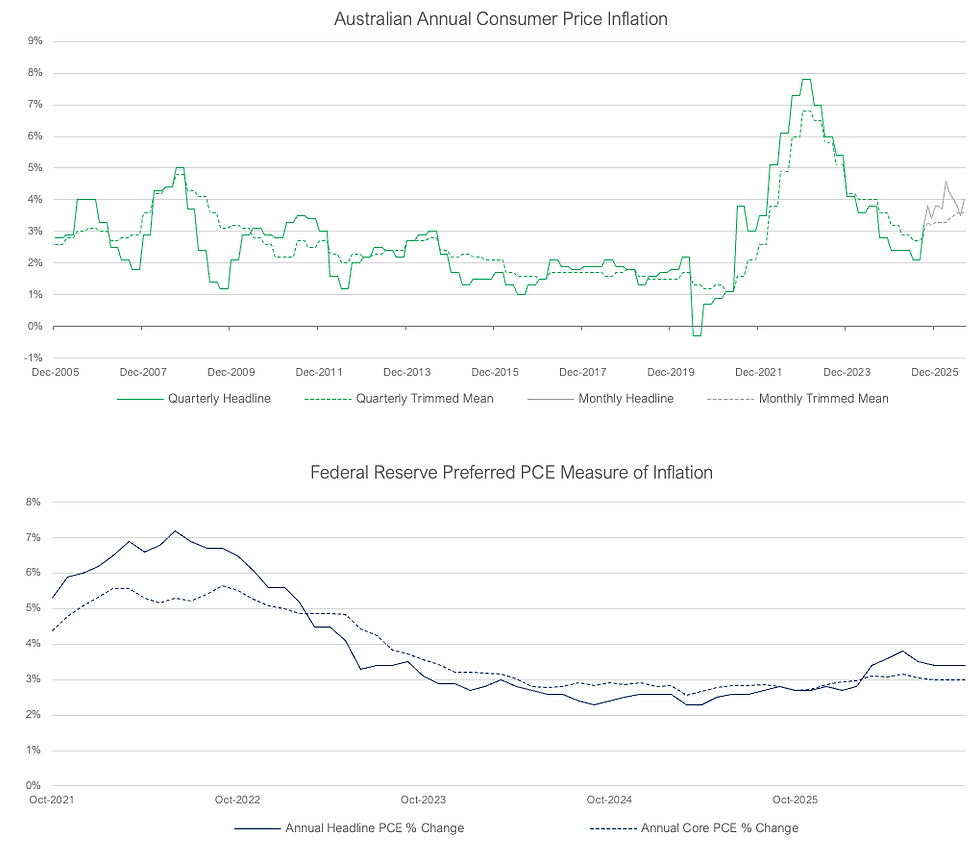
Australian CPI rose +4.0% in the 12 months to August 2026, up from +3.5% in July (+3.9% seasonally adjusted). This was just below the +4.1% consensus estimate. In monthly terms, the CPI rose +0.7% seasonally adjusted, and +0.4% in original terms, where consensus was +0.5%. July's rise was +1.0% mom. Trimmed mean inflation was +3.6% yoy, unchanged for a third consecutive month. It rose +0.2% mom seasonally adjusted, below the +0.3% consensus and down from +0.5% in July. The weighted median was +3.6% yoy (+0.3% mom). Rachael McCririck, ABS head of price statistics, said: "Trimmed mean annual inflation remained steady at 3.6 per cent for the third consecutive month in August." The ABS noted that "Automotive fuel and Electricity were both excluded from the trimmed mean and were the key drivers of the difference between headline and trimmed mean inflation." Housing (+5.7% yoy, up from +5.0%) was the largest contributor. Ms McCririck said: "Annual inflation of 5.7 per cent for Housing reflected rising costs for both New dwellings and Electricity. New dwelling prices rose 5.4 per cent in the 12 months to August as builders passed on higher costs for materials and labour." Electricity rose +13.2% yoy, up from +6.1% in July, largely because Commonwealth electricity rebates ended. Rents rose +3.6% yoy, unchanged since May. New dwellings rose +5.4% yoy, down from +5.7%. Transport (+5.6% yoy, up from +1.6%) was the second-largest contributor. Automotive fuel rose +14.8% mom and +13.5% yoy. Ms McCririck said: "This was driven by higher world oil prices and the unwinding of the remainder of the federal government's fuel excise relief measures in August." Other notable categories: Food and non-alcoholic beverages rose +3.0% yoy, down from +3.2%. Meals out and takeaway food (+4.1%) was the main contributor. Alcohol and tobacco rose +4.8% yoy, with tobacco up +11.5%. Recreation and culture rose +2.9% yoy. Games, toys and hobbies rose +12.7% as higher memory and storage component prices were passed on. Child care inflation slowed to +3.5% yoy from +7.3%.
Goods inflation rose to +4.2% yoy from +3.2% (+1.0% mom). Services inflation was unchanged at +3.7% yoy and fell -0.2% mom. Tradables inflation rose to +2.9% yoy from +1.7% (+1.3% mom). Non-tradables inflation was +4.5% yoy, up from +4.4% (0.0% mom). CPI excluding volatile items was +3.7% yoy (0.0% mom). Excluding volatile items and holiday travel, it was +3.9% yoy. Non-discretionary inflation was +4.7% yoy (+0.9% mom), against +3.0% yoy (-0.2% mom) for discretionary items. S&P/ASX200 8,793 +0.96%, AUDUSD 0.6968 -0.26%, Aus 2yr 0.88% -6bps, Aus 10yr 5.33% -4bps
Fin-X View
The headline figure is not the main story in today’s release. The jump to +4.0% yoy came almost entirely from policy-related and energy items. Core CPI was steady at +3.6%, and its +0.2% monthly rise was the softest in some time, indicating that energy is inflating headline CPI more than the underlying trend. Domestic, wage-linked services inflation is the main problem for the RBA. Services held at +3.7% yoy and fell -0.2% mom, non-tradables were broadly steady at +4.5%, and rents have been flat at +3.6% for four months. This doesn’t show the second-round acceleration that would justify another successive hike. But it remains too high for comfort and is not yet decisively turning down, suggesting that the risk of future hikes is still real. Even so, Governor Bullock yesterday said the "hope" is that four hikes are "restrictive enough" and the market has eased back towards pricing just one hike next year. The key test is the September-quarter CPI on 28th October, the last major input before the 3rd November meeting and the new Statement on Monetary Policy. Risks to the rate outlook now run both ways. On the upside are a further escalation in the Middle East pushing oil higher, fuel costs feeding into services and freight, and sticky short-term inflation expectations. On the downside, a faster slowdown in discretionary spending, the housing downturn and a softening labour market would strengthen the case that 4.60% should be the peak.
|